The White Gold of the Salzkammergut
Long before motorways, railway lines or paved roads existed, the River Traun was Upper Austria's most important transport artery. For centuries, it carried not only water but also the region's most valuable commodity: salt. Mined in the shafts of Hallstatt and Bad Ischl, this "white gold" was so prized that entire economic systems were built around it. The Salzkammergut region owes its very name to this mineral, and the Traun was the backbone of the entire trade.
Organised salt shipping on the Traun began as early as the 13th century. The Habsburgs quickly recognised the economic potential and established a strictly controlled monopoly. Every barrel of salt that left Hallstatt had to be transported downstream -- a journey that demanded courage, skill and an intimate knowledge of the river.
The Zillen -- Alpine Cargo Barges
The boatmen's vessel of choice was the Zille, a flat-bottomed wooden barge specially designed for the conditions on the Traun. These sturdy craft were between 15 and 25 metres long, could carry up to 30 tonnes of salt and were built from local spruce timber. Their shallow draught allowed them to negotiate even shallow stretches -- a necessity on a river whose water level could change dramatically with the seasons and weather.
The Zillen were constructed in Gmunden and Ebensee, where entire families made their living from boat building. A skilled carpenter needed roughly two weeks to complete a single Zille. Waterproofing with pitch and moss was especially critical, because not a single drop of water could be allowed to reach the precious salt cargo. Downstream, every Zille was a one-way trip: once it arrived at its destination, the timber was sold or repurposed for building warehouses -- the famous Salzstadeln.
The Perilous Passage Through the Traun Falls
The greatest challenge for the salt boatmen lay not in the length of the route but in a single, fearsome obstacle: the Traunfall. This mighty waterfall near Roitham, where the Traun plunges over a rock ledge, was the most dangerous point on the entire transport route. Here it was decided whether crew and cargo would arrive safely -- or whether the river would swallow everything.
To bypass the Traunfall, the boatmen devised an ingenious system: the Zillen were unloaded, the salt transported overland on ox carts, and the empty boats manoeuvred through a purpose-built canal -- the so-called "Durchlass" (passage). Experienced helmsmen who knew every rock and every current steered the Zillen through the raging waters. Despite this, accidents were a regular occurrence. The chronicles record shattered boats, lost cargoes and lives claimed by the river.
Anyone who paddles through the Traun Gorge with TraunXperience today passes stretches that once gave the salt boatmen sleepless nights. The rock formations, the narrow passages and the currents still tell of a time when every voyage was a life-or-death adventure.
The Boatmen's Guild and Their Traditions
The salt boatmen were no ordinary workers -- they were a proud guild with their own rules, rituals and a strict hierarchy. To become a salt boatman, one had to complete several years of apprenticeship and pass an examination before the guild master. Only those who knew the river inside out were permitted to steer a boat.
Every Zille crew consisted of four to six men: the Naufuehrer (helmsman), the oarsmen and an overseer responsible for the cargo. The hierarchy was clear: the helmsman had absolute command. His word was law, because in the dangerous passages a moment's hesitation could mean the difference between life and death.
The boatmen cultivated their own customs. Before every voyage they prayed, and in Stadl-Paura they built a chapel in gratitude for safe crossings. At the inns along the Traun, crews met in the evenings to exchange stories and warnings about changing currents. This oral tradition was vital for survival -- river charts barely existed, and knowledge was passed down from generation to generation.
The Decline with the Coming of the Railway
Everything changed with the construction of the horse-drawn railway from Budweis to Linz to Gmunden from 1827 and the later steam railway. What the salt boatmen transported over days on the water, the railway managed in hours on rails. Within a few decades, salt shipping on the Traun became uneconomical. The last professional salt consignments on the Traun were recorded in the 1860s.
For the boatmen's families, the end of salt shipping meant a profound upheaval. Many found work in the emerging industries along the Traun -- paper mills, flour mills and sawmills. Others migrated to the cities. The Zillen vanished from the Traun, and with them a way of life that had shaped the river for centuries.
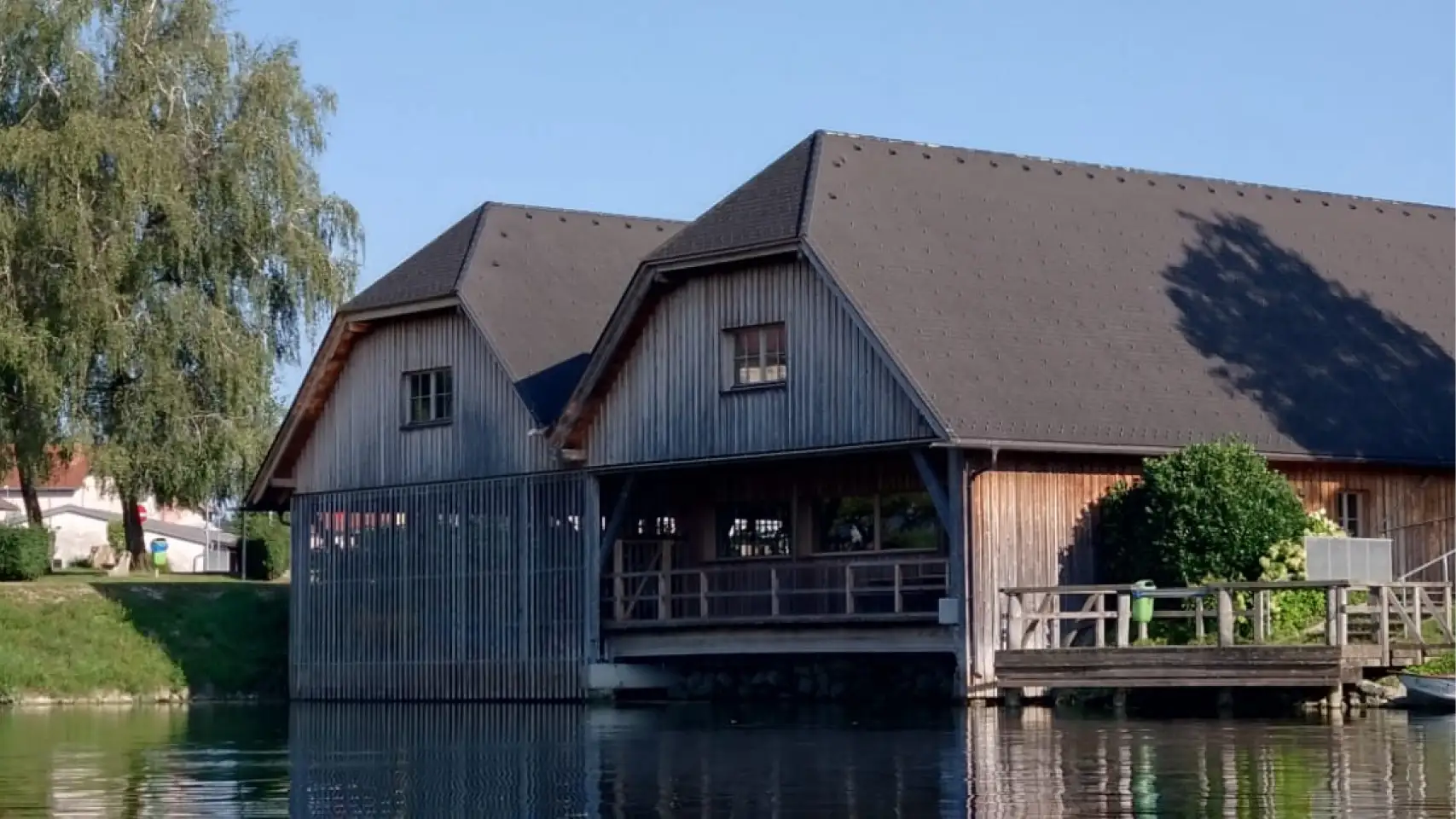
Yet the legacy of the salt boatmen remains visible to this day. The Salzstadeln in Stadl-Paura still stand on the riverbank -- massive stone buildings that once housed thousands of tonnes of salt. The place name "Stadl-Paura" itself refers to these warehouses (Stadel = warehouse). Street names such as "Schiffleutgasse" or "Salzgasse" recall the former residents and their trade in many towns along the Traun region. And the Schiffleutmuseum in Stadl-Paura preserves tools, models and documents that keep the hard life on the river alive.
In the Footsteps of the Salt Boatmen -- with a Paddle Instead of an Oar
When you travel down the Traun with TraunXperience today, you follow the same route the salt boatmen took centuries ago. The landscape has scarcely changed: the same limestone cliffs rise from the water, the same floodplain forests line the banks, and the current still commands respect.
Of course, a paddling tour today is no longer a fight for survival. Instead of 30 tonnes of salt, you carry a life jacket and a paddle. Instead of fearing the Traunfall, you enjoy the views of the Traun Gorge. But the underlying feeling is the same: you are on the water, the river sets the rhythm, and the nature around you is overwhelming.
Our guides tell the stories of the salt boatmen on every tour -- at the original locations. Where the Zillen once moored, we take a break. Where the boatmen prayed, we marvel at the rock formations. And where the white gold was loaded, we paddle past the Salzstadeln that have stood on the riverbank for over 400 years. History comes alive when you experience it in the right place.
The salt boatmen made the Traun what it is today: a river rich in history, adventure and natural beauty. Their legacy lives on -- in the buildings on the riverbank, in the stories of the region and in every paddle stroke that carries you downstream.