Why Stand-Up Paddling Is the Perfect Entry to Water Sports
Stand-up paddleboarding -- SUP for short -- has become one of the fastest-growing outdoor activities in Europe, and for good reason. Unlike kayaking or canoeing, SUP requires no prior experience, no expensive certification, and no particular athletic background. You stand on a wide, buoyant board, hold a single paddle, and glide across the water at your own pace. It is, quite literally, as simple as standing up.
But simplicity does not mean there is nothing to learn. A few practical tips can make the difference between a frustrating first outing and a magical one. After guiding hundreds of first-timers on the Traun, I have distilled the most common questions and mistakes into ten actionable tips that will give you confidence from the very first stroke.
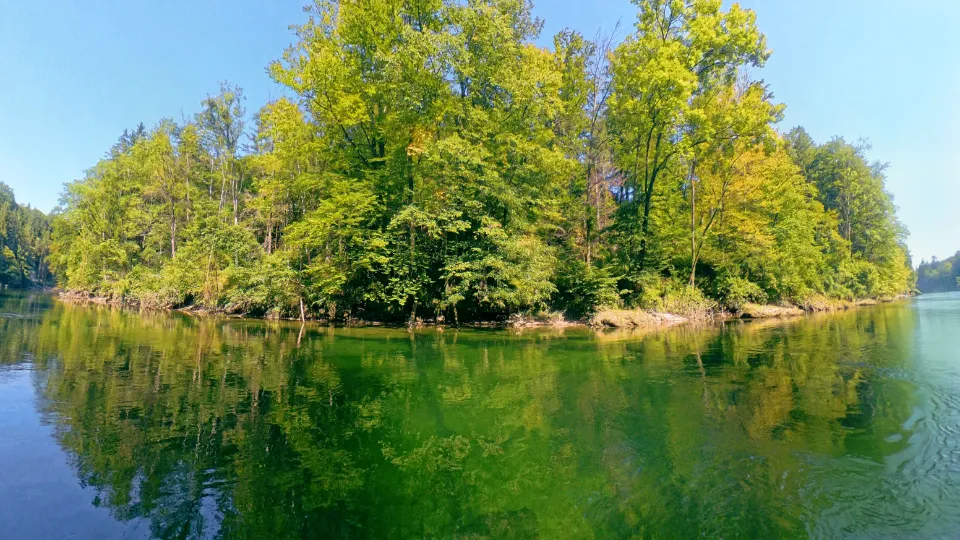
The Lower Traun between Lambach and Stadl-Paura in Upper Austria is particularly well suited for beginners. The current is gentle, the water is clean, and the surrounding Natura 2000 landscape provides a stunning backdrop that makes even wobbly starts feel worthwhile.
Tip 1 -- 3: Choose the Right Board, Start on Your Knees, Find Your Stance
Not all SUP boards are created equal. For beginners, a wider board (at least 32 inches or 81 centimetres) provides far more stability than a narrow touring board. Inflatable all-round boards are the standard choice for newcomers: they are forgiving, transportable, and surprisingly rigid when properly inflated. At TraunXperience, we provide high-quality inflatable boards designed specifically for stability on river water.
Before you stand up, start on your knees. Kneel in the centre of the board, just behind the carry handle, and take a few paddle strokes to feel the balance. This is not cheating -- it is how every instructor teaches it. Once you feel comfortable, place one foot flat where your knee was, then the other, and slowly rise into a standing position. Keep your feet parallel, hip-width apart, with your toes pointing forward. Your knees should be slightly bent -- stiff legs are the number one cause of wobbling.
Look at the horizon, not at your feet. This single correction transforms most beginners' balance almost instantly. Your body follows your gaze: look down at the water and you will sway; look ahead at the riverbank and your core stabilises naturally.
Tip 4 -- 6: Paddle Technique, Turning, and Using the Current
Hold the paddle with one hand on the T-grip at the top and the other on the shaft, roughly shoulder-width apart. A common beginner mistake is gripping the shaft too close together, which reduces leverage and makes each stroke inefficient. The blade should enter the water fully and pull back alongside the board in a smooth, vertical motion. After four or five strokes on one side, switch hands and paddle on the other side to maintain a straight course.
To turn, you can either paddle on one side only (the board will curve away from your paddle side) or use a sweep stroke -- a wide, arcing motion from the nose of the board towards the tail. For a quicker pivot, step one foot back towards the tail to lift the nose and spin the board around. This takes practice, but on calm water like the Traun, you have all the time in the world.
On a river, the gentle current does much of the work for you. Unlike a lake, where you paddle in circles and return to the same spot, the Traun carries you downstream through ever-changing scenery. This is one of the great advantages of river SUP: you cover distance without exhausting yourself, and every bend reveals a new view. Our guided tours on the Traun Gorge stretch are designed precisely for this experience.
Tip 7 -- 8: Falling Safely and What to Wear
You will fall in. Accept this before you start, and it immediately becomes less daunting. When you feel yourself losing balance, try to fall to the side, away from the board -- not onto it. A flat belly-flop into the water is far more comfortable than landing on the hard surface of the board. The Traun is clean and typically between 15 and 20 degrees Celsius in summer, so an unplanned swim is refreshing rather than dangerous.
Always wear a leash -- a coiled cord that attaches your ankle to the board. If you fall off in a current, the leash ensures your board stays within arm's reach. Without a leash, an unmanned board can drift downstream surprisingly fast. We provide leashes with every rental and consider them non-negotiable safety equipment.
"Everyone falls off the board on their first day. The ones who laugh about it and climb back on are the ones who fall in love with the sport."
As for clothing, leave the jeans and cotton t-shirts at home. Quick-drying synthetic fabrics or dedicated SUP wear are ideal. In the morning or on cooler days, a thin neoprene top (1.5 to 2 millimetres) keeps you warm without restricting movement. Footwear is a matter of preference: neoprene shoes protect against sharp stones at the put-in point, but many paddlers prefer to go barefoot on the board itself for better grip. Sun protection is essential -- the reflection off the water doubles your UV exposure. A hat, sunscreen with high SPF, and sunglasses with a retainer strap are part of every experienced paddler's kit.
Tip 9 -- 10: Read the Conditions and Respect the River
Before heading out, check the weather forecast and the water level. Wind is the SUP paddler's greatest adversary -- even a moderate headwind of 20 kilometres per hour can make upstream progress nearly impossible and turn a relaxing tour into a strenuous workout. On the Traun, the morning hours are typically the calmest, with glassy water and minimal wind. This is also when wildlife is most active: kingfishers darting along the banks, herons standing motionless in the shallows, and the occasional beaver slip visible in the muddy banks.
Water levels on the Traun can vary with rainfall in the Salzkammergut catchment area. Higher water means a faster current, more debris, and conditions better suited to experienced paddlers. At TraunXperience, we monitor the water gauge daily and will reschedule tours if conditions are not safe for beginners. This is not overcaution -- it is respect for the river. The Traun is a Natura 2000 protected waterway, and our responsibility as guides is to ensure that both our guests and the ecosystem are treated with care.
Finally, remember that the Lower Traun is a living ecosystem within the European Natura 2000 network. Stay on the designated routes, do not disturb nesting birds on the banks, and take all waste with you. SUP is one of the most environmentally friendly ways to experience a river -- no motor, no emissions, no noise. If we paddle respectfully, the river will remain as beautiful for the next generation of beginners as it is today.