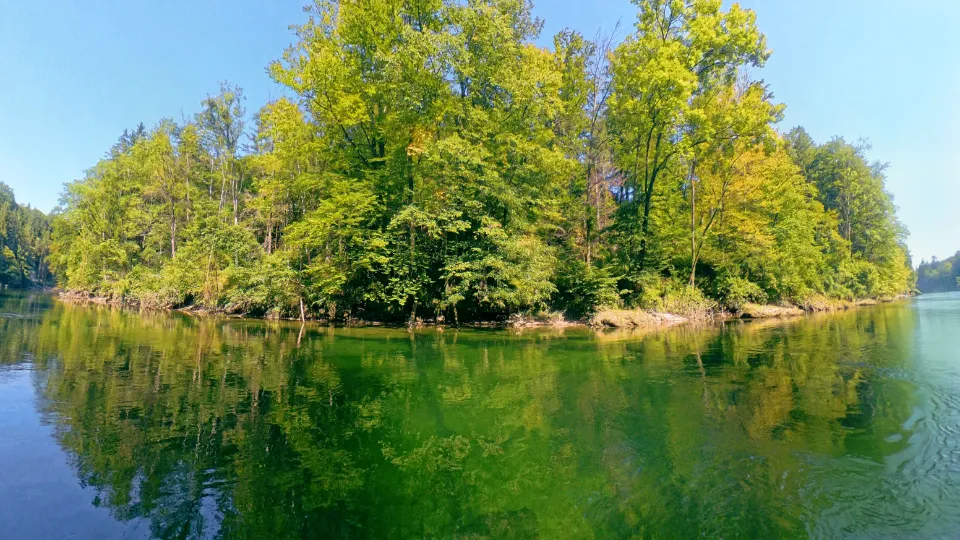
When you paddle on the Traun, you glide through one of the last intact floodplain landscapes in Upper Austria. On both sides of the river stretches a green ribbon of willows, alders and ash trees -- the floodplain forest. This ecosystem is far more than a pretty backdrop: it is habitat, flood protection and natural air conditioning all in one.
What is a Floodplain Forest?
A floodplain forest -- also known as riparian woodland or alluvial forest -- is a type of woodland that is regularly flooded by high water. It forms the natural transition between the riverbed and the dry hinterland. In Central Europe, floodplain forests are among the most species-rich and at the same time rarest habitats of all.
On the Lower Traun between Lambach and its confluence with the Danube, continuous stands of floodplain forest still exist, protected under European law as part of the Natura 2000 reserve. What makes this stretch of river special: the Traun still has a relatively natural flow dynamic here that keeps the floodplain forest alive.
Tree Species and Vegetation
The floodplain forest along the Traun consists of several zones that harbour different tree species depending on their distance from the water and how frequently they flood.
Directly on the bank, willows dominate -- particularly the white willow and the purple willow. Their flexible branches and deep roots make them perfect pioneer trees that can withstand even strong currents and ice drift. A few metres inland follow black alders and ash trees, which prefer the moist soil and create a cool microclimate with their dense canopies.
In the higher-lying hardwood floodplain, pedunculate oaks, field elms and sycamore maples grow. These trees are only flooded during major high water events and form the most stable part of the floodplain forest. On the forest floor in spring, wild garlic, wood anemones and lesser celandine thrive -- a white and yellow carpet of flowers that transforms the forest into a sea of blossoms in April.
Wildlife Habitat
The floodplain forest is a corridor of life. From the water, TraunXperience guests paddle directly past this habitat -- and those who travel quietly are rewarded.
The kingfisher is the emblematic species of the Traun floodplain. It breeds in steep riverbanks along the river and hunts small fish in arrow-fast dives. Its brilliantly turquoise plumage makes every sighting an unforgettable moment. Also present: the beaver. Its gnaw marks on willow trunks and the characteristic beaver slides on the bank are clearly visible from the boat.
In the treetops, golden orioles nest with their exotic-sounding song, while on the ground grass snakes glide through the leaf litter. In the evenings, bats emerge from tree hollows to hunt insects above the water. The twilight hours are the best time to experience this diversity.
Flooding: Engine of the Ecosystem
What appears destructive at first glance is vital for the floodplain forest: regular flooding. Floods bring nutrient-rich sediment that fertilises the soil. They create new gravel banks, pools and deadwood structures that serve as nurseries for fish and amphibians.
Without flooding, the floodplain forest would slowly dry out and transform into an ordinary mixed woodland. The dynamic connection between water and land is what makes this habitat so uniquely productive. On the Traun, this dynamic is still preserved along the relatively natural stretch between Lambach and the Danube confluence -- a stroke of luck for biodiversity.
Threats and Protection in the Natura 2000 Area
Over 90 per cent of the original floodplain forests in Central Europe have already been lost -- through river straightening, dams, agricultural use and development. What still exists on the Lower Traun is therefore of inestimable value.
The European Union's Natura 2000 network protects this habitat with clear rules: no clearing of riverbank vegetation, protection of breeding sites, restriction of pesticides in the catchment area. As paddlers, we bear responsibility by keeping our distance from sensitive areas, leaving no litter and treating the floodplain forest as what it is -- a living natural heritage.
TraunXperience deliberately embraces silent slow tourism. Our boats have no engines, our groups are small, and our guides share their knowledge about the floodplain forest directly on site. This way every tour becomes a lesson in ecology -- without any lecture hall.