The Vltava -- known to German speakers as the Moldau -- is a name that conjures images for paddlers: Vyšší Brod, Český Krumlov, long canoe days through Southern Bohemia. No wonder it ranks among Central Europe's most popular paddling rivers -- it is genuinely beautiful and rightly sits on many bucket lists. Still, before you load the car, it's worth asking honestly: does it really have to be a trip across the border, when a river right on your doorstep does many things better? This article lays out the strengths of the Lower Traun factually -- not against the Vltava, but in favour of a choice with a clear conscience.
Water Quality: Clear Water for Swimming
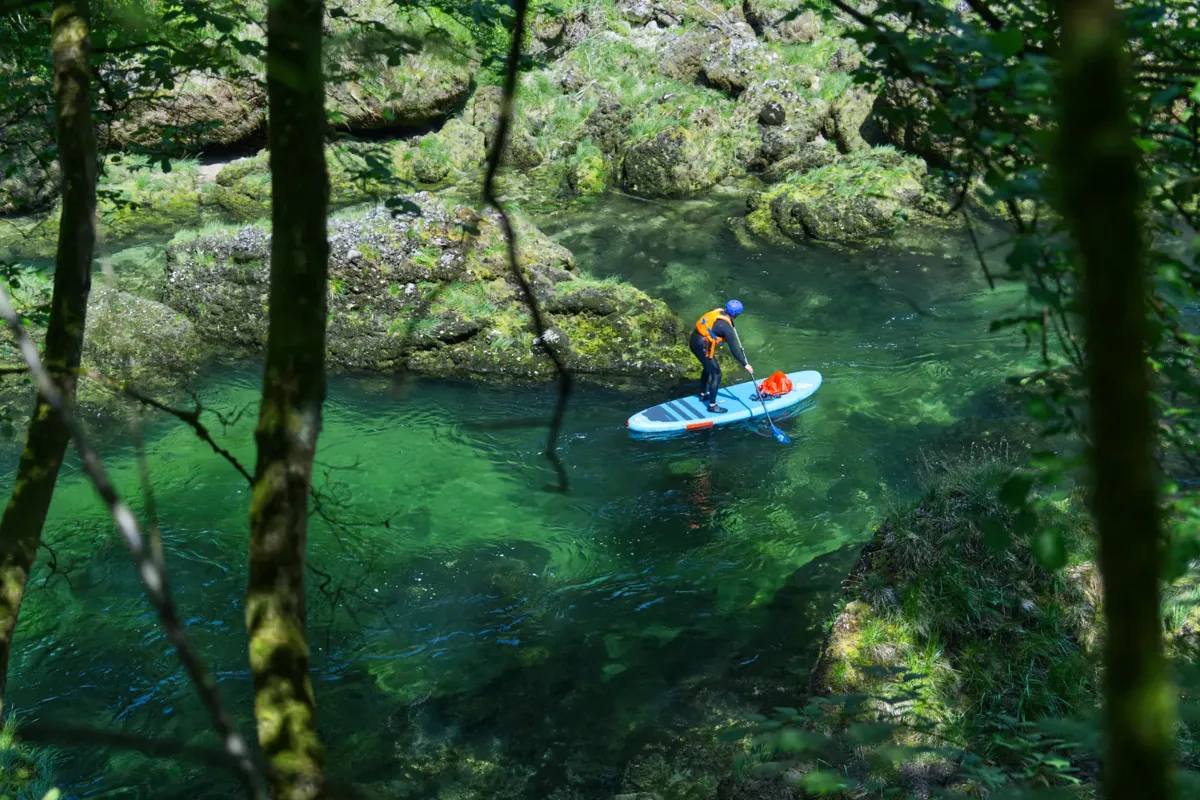
Perhaps the most noticeable difference lies in the water itself. The Traun is fed from the Salzkammergut lakes and carries clear, often turquoise-shimmering water over long stretches. After decades of improvements to wastewater treatment and industrial discharges, the biological water quality of the Lower Traun has improved markedly over the past 10 to 15 years -- on hot summer days the river is once again a popular bathing spot in many places.
The Vltava, by contrast, carries peaty, brownish water especially along its middle course. It is comparatively clean by Czech standards, but invites you in for a clear dip less often. At the many weirs along the route, foam tends to build up -- a visually unappealing phenomenon that simply isn't an issue on the Traun. So if you want not just to paddle but to swim in clean water along the way, the Traun offers the better conditions.
Deep Enough to Swim, Not Just to Scrape
A practical point many only notice once they're on the water: at normal levels the Vltava is only knee-deep over long sections. Its rocky bed means constant ground contact -- a real material concern for folding boats, and in many spots a refreshing plunge is simply too shallow.
The Traun Gorge offers a different experience: deeper, calm pools of clear water where you can swim wonderfully on warm days. Instead of scraping the bottom, you glide through a quiet river valley -- and take a swimming break wherever it feels right. You'll find more about the route on our Traun Gorge page.
Peace Instead of Mass Tourism
Anyone paddling the Vltava in high summer shares it with many others. The popular middle section is heavily frequented in peak season, and the campsites along the river are often loud and overcrowded -- the first week of July is considered the peak of the crowds and is happily avoided by those in the know. That comes with the territory of a mass-tourism river.
This is exactly where the TraunXperience philosophy begins: slow tourism instead of crowds. Our groups are small, our boats have no motor, and the Lower Traun between Lambach and the mouth of the Danube runs through a Natura 2000 conservation area where nature and quiet take centre stage. Here you hear kingfishers, not party noise from the next boat. Relaxation starts where the bustle ends.
A Short Journey: Why Travel So Far?
For most Austrian guests, the Vltava means a journey of several hours across the border, a motorway vignette, finding accommodation and often a whole weekend of logistics. The Lower Traun lies right in the heart of Upper Austria -- for many it is reachable in under an hour. The meeting point in Lambach is conveniently connected via the A1 motorway and the Western Railway.
Less travel means more time on the water, lower costs and a smaller carbon footprint. You don't need to cross a border for a wonderful river experience -- it's right on your doorstep. If you're planning your trip, you'll find all the details and the river map with us.
Stopping for a Bite Along the Water
A paddling day only feels complete when the break is right. Along the Traun there are excellent spots for this -- many of them directly on or near the water. At Fisch Hager you'll find fresh fish from the region, and the Steckerlfischbraterei Wenk is a classic for anyone who wants to round off the day with a crispy grilled fish on a stick -- both are partner businesses of TraunXperience.
If you prefer something Italian, Pizzeria Palermo is a great choice, and Lamperdini isn't far away either. So you can finish the day exactly to your taste -- without long detours, right in the middle of the region. You'll find an overview of our recommendations among our partner businesses.
700 Years of Salt History Right on the Bank
What ultimately makes the Lower Traun unique is the blend of nature and cultural history. For centuries the "white gold" was transported along the Traun -- salt from the Salzkammergut, hauled by the legendary salt boatmen. That history is still visible on the bank today.
In Stadl-Paura the mighty salt warehouses recall the heyday of the salt trade, and the baroque Holy Trinity Church -- built by the boatmen's brotherhood -- is a unique monument to that era. A few kilometres upstream, the Benedictine Abbey of Lambach, with its world-famous Romanesque frescoes, towers above the river. To learn more about the people behind the salt trade, read our piece on the salt boatmen.
This density of living history over such a short distance -- salt warehouses, churches, a thousand-year-old abbey, all embedded in a European conservation area -- exists nowhere else quite like this. A tour on the Traun is therefore not just a paddling day, but a journey through nature and history at once.
Conclusion: The Best Is Right on Your Doorstep
The Vltava remains a beautiful destination -- there's no arguing with that. But if you're after clear bathing water, peace away from the crowds, a short journey, good places to eat and an extraordinary cultural history, you'll find all of it bundled together on the Lower Traun. Sometimes the best adventure isn't across the border, but right outside your own front door.